
By Gabrielle Ledin - Shaders, Lighting, and Texturing Artist
While developing Esquelito we wanted to make sure that the players’ main objective of the game was to spread joy. So, we aimed to create an environment to immerse the player that matched that theme. Along with our fun environmental assets, we used lighting and shaders to fill the space with vibrant colors. We also focused a lot of time while designing the lighting and textures towards making sure they worked with other assets to make one cohesive environment for the player to explore.
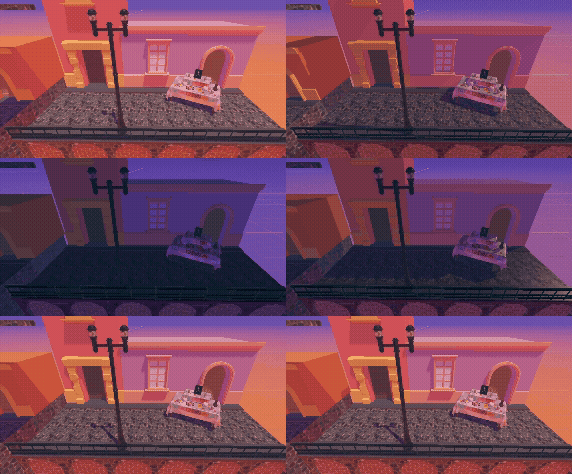
Prototype light cycle
Like many other aspects of Esquelito’s development, the lighting and shaders have been under continuous development that evolves with the rest of the game. From the beginning we knew that we wanted to create an environment that consisted of warm vibrant colors that sparked joy. So, there was no better time to have the game take place than at sunset! Our first lighting design was to have the sunset while the player was going through each level. We wanted the world to come alive around the player as they went through the game, by lighting up streetlamps and windows.
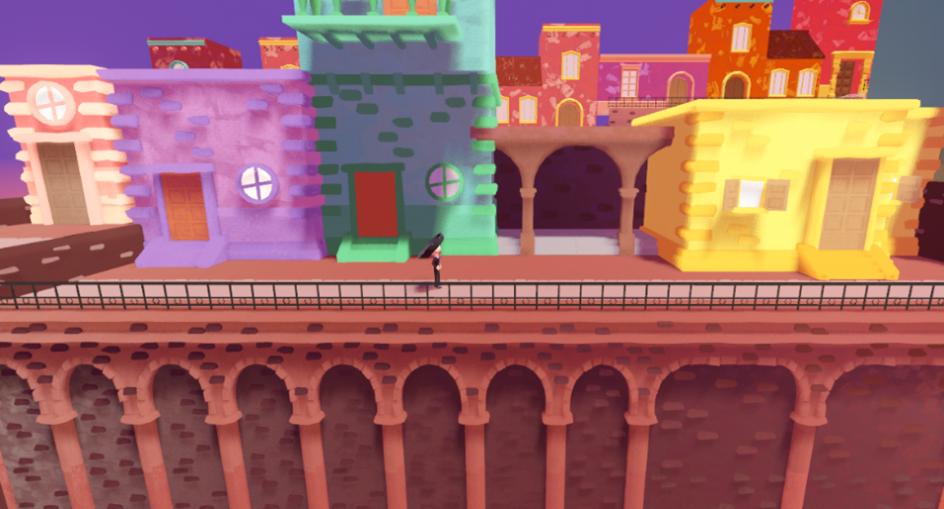
Example of current Level 1 lighting
After doing some early playtests of Esquelito we decided to keep the core of our lighting idea but change how we went about it. With what we had, the change of lighting was affecting gameplay and messing with the players’ flow state. So instead of having the light change in each level while you play, we decided to keep each level’s lighting consistent and have them get darker with the progression of levels. This way we can still express the passage of time without affecting gameplay.
Esquelito’s primary shader is used as a way to speed up the texturing process of the environment and to keep it cohesive. Our environment kit was created with it being modular to be able to create different buildings with the same assets. But we also wanted the buildings to be colored differently to make sure the environment was not monotonous. This is where our shader comes in. It was developed through the collaboration of art and computer science teams with multiple iterations to be able to get the necessary details in the textures while making sure it did not affect the performance of the game.
With our shader, the environment team is able to use only a handful of tiling textures for multiple assets. Within the shader, we can scale the size of the texture and move it along with the assets to create variation without changing the texture. The shader also adds color to each asset. We use grayscale texture as the base and fill it with a color chosen from the palette we developed. By using the shaders features we are able to reuse the same assets in our environment pipeline.
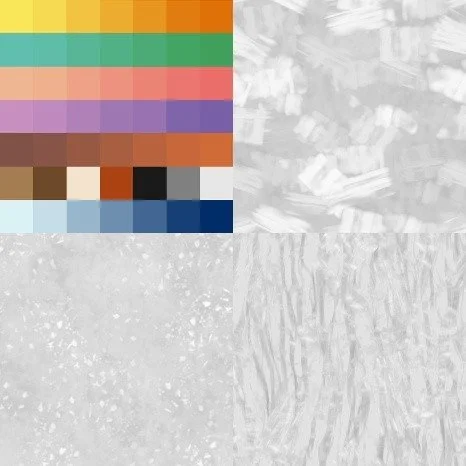
Color Palette and Textures
Both our lighting and shaders are made to complement the gameplay. We aim to optimize our pipeline to meet our standards. And, as we continue to develop Esquelito, our lighting and shaders process will evolve with it to make an immersive environment for any player to enjoy.
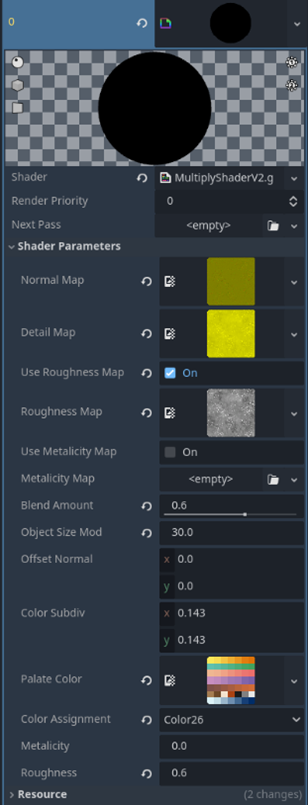
Screenshot of Shader in Editor